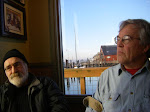
Wednesday, August 17, 2011

Why I Threw a Piece of Cucumber at My Hebrew Teacher


Why I Threw a Piece of Cucumber at My Hebrew Teacher

But first the Farm News. August is like you're just waiting. We're working everyday, but our attitude is more like we're waiting for fall to come. Something will happen in September, and we sure hope it's a good thing, but right now we're just waiting.

The dahlias are popping. Stand back! By Labor Day it might be incredible, which is a good thing because we're having an open house and many people are coming to view all 150 varieties.

Onions and Annuals. We picked all the onions -- many pounds -- and left them to dry in a shaded area on the cement patio. Then I made a schematic of the garden, so I can remember not to plant more onions in the same place -- I will plant turnips instead. And some broccoli and maybe a little lettuce. We're going to plant more zinnias and celosia too. We should have 60 more days of summer weather, so if we can squeeze a few more flowers in, then we can sell them -- and get rich!

Critters. It might be bad luck to brag here, but I have been having good luck keeping the gophers under control. I set traps and they get caught. I offer them little gopher treats (poison) and they go off to gopher heaven. I mean the gophers no harm, but it's the way of nature.

Tragedy. We lost a kitten. Tom, the litter mate to Jerry, was out and about around the motor home last Thursday, but by evening, when we scoot them back inside, we found Jerry, but no sign of Tom. Determined searching began with quiet listening for meowing, but no sign of Tom. Sad to say he is gone. It's hard to believe the coyotes came in broad daylight -- we really don't have another explantion for the loss. Tom was a soft-hearted kind of spaced-out kitten -- a dreamer and very affectionate. We miss him. Jerry and I hang together more now. We're all at risk, so let's cherish the moment.


Why I Threw a Piece of Cucumber at My Hebrew Teacher

& How I came to Study Torah in the First Place


They asked me why. Why are you learning Hebrew? Why are you going to the Torah class at a synagogue? You’re not even Jewish.

Buy why is a dumb question. There is only one important question – Is it a good thing?

If it’s a good thing, then why doesn’t matter. If it’s a bad thing, then stop doing it.

It was the summer of 1992, I was living on Blakeslee Street in West Cambridge and working as a landscaper. And I was totally miserable.

I had just broken up with Helen. Her last words were, “Never call me again.” I was heartbroken, tormented, losing sleep, drinking too much, phoning friends late at night -- I didn’t know what to do.

But I had recently joined the Tikkun group, and we met on Sunday mornings for discussion. I had new Jewish friends -- Daniel Gewertz, a film critic, Harvey Blume, a writer, Lois Isenman, a biologist, Diana Lobel, a PhD student in Jewish Studies, Debbie Osnowitz, with porcelain skin and a brilliant mind, Helen Benjamin, who had an impressive collection of Teddy Bears in her Brookline apartment, Ted Pietras, in real estate in Boston’s South End, and Marty Federman, who was director of Hillel at Northeastern University.

It was an ethnic thing. Boston was full of ethnics – Irish gangs, Italian neighborhoods, Armenian restaurants. I should have gone Irish, but that would have been too easy. Instead I picked the hardest one – Jewish. I was going to learn it and figure it out.

So I went to the Tikkun meetings and listened. The talk was really cool. I liked the rhythm of it. I wore clean clothes, but my shirt was always wrinkled -- I didn’t have an iron. It’s not that people were dressed for the occasion, but I felt conspicuous with my wrinkled shirt.

The meetings kept me from suffering – remember, I was heartbroken, obsessively reviewing the very wrong things I said to Helen – and she wouldn’t talk to me, not now, not ever. So the Tikkun meeting kept me from suffering for three hours every other Sunday morning. That wasn’t enough, but it helped.

One day --I was not really looking for a solution, but more or less on a dare -- I found the Judaica section at the Cambridge Public Library. I picked out the books in Hebrew.

It was very bold of me to even look at these books. Loud booming voices were shouting from thunderous clouds, “Thou Shall Not” – you don’t look at these books, you shall not pass, it’s not for you – go back to being a landscaper, pick up your trowel, LEAVE THESE LETTERS ALONE.

I heard the voices, but I didn’t care. I was in too much pain. Kill me, so what!

I took the books home - a Hebrew grammar, a Hebrew-English dictionary and a text book – home to my furnished apartment on 42 Blakeslee Street in West Cambridge. I opened the books on the kitchen table and began to learn the letters – 22 letters in the Hebrew alphabet.

In a way, it was easy, 22 letters in 22 shapes representing 22 sounds. How hard is that?

I learned the letters in a day. By late afternoon I was picking out words in the text. And I was drawing the letters on a big sheet of paper. I really liked their shape and the way they flowed.

It was love. It was infatuation. I was so absorbed. Hours passed in delightful study, and I never thought of Helen. I was almost happy. Relief! I could fill up my day.

Although it was a little weird because, like I said, I’m not Jewish, and what if the Jewish cops find out and come over to my apartment and pummel me with sticks.

Oh, the Jewish cops don’t do that. They don’t even care. Well, they do care. Of course, they want you to study the text in a respectful manner, but otherwise you’re welcome to it.

Except they don’t say that. They don’t say anything -- there are no Jewish cops.

But what about the booming voices from the thunderous clouds? Well, yes, those are completely real, the voices of divine spirits who can put you in a world of hurt or shower you with blessings and diamond lights.

The divine spirits are real. I found out that night, after the day when I learned the 22 letters. I had the most incredible dream. I dreamed of black letters in a sea of golden flames.

I never had such a dream in my life, but that night I saw the letters in my dream, living, breathing and on fire.

The letters are alive! Shining black in a sea of gold-red flames!

When I woke up the next morning, I was astonished and full of wonder. And there was no one to tell. I wasn’t going to waste this vision in casual talk. I wasn’t going to tell anyone. That dream was 19 years ago, and I kept it inside my all this time – black flaming letters burning inside me.

The letters kept me warm all this time. If some say it was nothing, fine. Or if they say it was a revelation, that doesn’t matter to me either. I just knew I had found something. I learned the letters and began to study the words. I developed a style of calligraphy and wrote the letters over and over again, like a prayer.


Now I will move ahead to the funny part of this story.

One Sunday at the Tikkun meeting, Diana Lobel was reading a Hebrew text, and I looked over her shoulder and began saying the words aloud. She said, “You know Hebrew?” I said, “I’ve been studying.” She asked “With who?” I said, “By myself.”

She said, “Come to my class. We meet on Sunday night at 7 pm at Beth Shalom.”

So I began learning with her group – not such a big group, three students, me, Bobby Vilinsky and a very strange, very thin young woman who seemed to have wandered in off the street.

I could write a book about Bobby Vilinsky. We became great friends, and we often discussed his disastrous experiences with women or his latest digestive issues. He was an artist of great intensity and poverty.

Diana Lobel was a PhD student in Jewish Studies at Harvard. She had the pale look of a scholar, but she had bright, black curly hair. Diana had a way of seeming so unworldly, as if she did nothing but study and pray -- but that was not true, she was very worldly at the same time -- if she was paying attention. She often surprised me in that way.

We spent several weeks on the first verse, “In the beginning God created the heavens and the earth.” She said the whole of the Torah was contained in the first verse – or she may have said that, I’m not sure. But it sounds like something a Jewish scholar would say – that the whole of the Torah, and all of the Law, and a vivid description of all time and all creation are contained in the first verse – so we studied it, from every angle, and believe me, there are many angles -- more than you can imagine. The depth was incredible.

But she was so spacey. Like the time we had a Sabbath dinner at Lois Isenman’s house. It was Friday night, when Jews eat chicken on their best table cloth. I don’t know if we had chicken that night, but Lois lived in a very nice red brick house in the suburbs.

I Have to Stop Now

I have to stop now, or this story will get too long for an Internet newsletter. But you must be excited by now. Did I really throw a piece of cucumber at my Hebrew teacher? Stay tuned for the next exciting segment – coming soon.


Unsubscribe by saying so in a reply.

Frog Hospital and Farm News Subscriptions. If you find this newsletter worthwhile, send a check for $25, made out to Fred Owens and mail it to Fred Owens, 7922 Santa Ana RD, Ventura CA, 93001.

Or Use PayPal. Go to the Frog Hospital blog and use the PayPal button.


--
Fred Owens
cell: 360-739-0214

My blog: Frog Hospital

send mail to:

Fred Owens
7922 Santa Ana Rd
Ventura CA 93001


Saturday, August 06, 2011

D'Var Torah on Farming and Writing


Fred's Farm News

By Fred Owens

I am bored with the farm. It's very slow around here these days -- it's the dog days of summer I guess. Low energy..... I feel like my bond-rating got downgraded. Well, collectively speaking, it just did.

"The political brinkmanship of recent months highlights what we see as America's governance and policymaking becoming less stable, less effective and less predictable than what we previously believed," said S&P, one of three leading credit rating agencies...... It's hard to argue with this statement -- it seems to accurately describe the recent madness in Washington.

Okay, aside from that down-graded feeling, the report from the West Coast is that it's been a cool summer and everything is late, tomatoes for instance. We have an abundance of bright green tomatoes on the vine, but they are taken the very longest time to ripen.....We're supposed to be patient in this line of work, but I am not very patient. I look at the tomatoes and think "hurry up, this is August, for Pete's sake."

I know -- they will ripen in nature's own good time, but I'm an instigator and not willing to just let things happen -- that's my human nature and I make no apology

I did learn about beets from Ann. She said the secret to growing beets is to ignore them. Apparently these dark-blooded creatures do not like being watched. So I forgot about them entirely until Michael, my co-worker from Scotland, discovered the beets were ripe and fulsome. Michael, being Scottish, calls them "beet roots." He picked a nice bunch of beets and made them peeled, shredded and cooked with a bit of sugar and vinegar -- incredibly tasty.

Then we ate some of Brian's leeks at the same meal. Brian, with far less total horticultural experience than I have, grew much better leeks. I can't understand this. I planted three five-foot rows of leeks and they all grew with hard, woody stems, and not a single one of them was edible.

Then Brian, Mr. Moonface, who works so slowly that he hardly even moves -- casually dropped in a few seeds -- his leeks were fat and tender and pale green. I don't get it. I was gardening before he was born..........But maybe I'm impatient and I try too hard.

The real truth is that Brian is a fully-dedicated gardener and I am not. It's my day job, and that's all it ever has been or ever will be. Writing comes first, gardening and farming comes second.

I know the difference. Men and women who make horticulture their life's work often succeed -- they grow better leeks....... I salute them.

But writing matters. Here's what I wrote today, and if you think it has little to do with farming then you would be quite wrong.

D’Var Torah
What is the connection between writing and farming as occupations? This reminded me of a saying from Pirkei Avot, a Jewish book of wisdom.

This is the saying, "Im Ein Kemach Ein Torah, Im Ein Torah Ein Kemach." ---- which means, "Where there is no Bread, there is no Torah, and where there is no Torah, there is no Bread."

This saying answers the question, "What should I do with my life?" You don't choose between writing and farming because you need both. You need to farm because you need to eat. And you need to write because you need to seek and serve the truth.

You don't choose one over the other -- Bread and Torah, Livelihood and the Spiritual Path -- both are essential for a good and balanced life.

Now I will eat lunch.
Where there is no bread there is no Torah, where there is no Torah there is no bread.

This still makes sense today. We're working on the watering system -- there's a leak out there somewhere and the pump keeps running, so we just turn on the pump when we need water for something -- gotta find that leak.

We need water. Fortunately, the farm is right by the Ventura River and there is an abundance of water only thirty feet down. It's ours for the cost of the electricity to pump it -- Not free, but abundant.

Where there is no bread there is no Torah, where there is no Torah there is no bread....... Or, in the original language, "Im Ein Kemach Ein Torah, Im Ein Torah, Ein Kemach."

I used to belong to the Tikkun discussion group when I lived in Boston. Tikkun is a Jewish spiritual/political magazine founded by Michael Lerner who coined the phrase "politics of meaning." Hillary Clinton invited Lerner to the White House shortly after Bill Clinton became President. Lerner seemed likely to become a spiritual adviser for the Clintons -- possibly like Bill Graham had been for previous Presidents. But Lerner's presence at the White House caused a storm of controversy, and I still don't know why. He was a little hippy-dippy and lefty-lefty, but not very extreme. His views were not that unusual.


Anyway, in 1991, living in Cambridge, and wandering around town looking for something to do, I happened to notice that Michael Lerner was giving a talk at Temple Beth Shalom -- the famed "Tremont Street shul" near Central Square...... Never having entered a synagogue in my life, I dropped in that evening, and I liked what I heard, and I liked the people I met, so I joined the group. They never said you had to be Jewish and I wasn't.

We met on Sunday mornings at people's houses and apartments, maybe 12-15 people each week, and we discussed topics based on an article in Tikkun magazine. It was very interesting. The people in the Tikkun group were impressively articulate -- I mean, this was Boston. Myself, I never said much, but listened in wide-eyed wonder and they called me, behind my back but kindly, "the space-case from Seattle."

I'm not from Seattle, but I often said so when I was in Boston, just to make it easy for them -- saying "I'm from LaConner, a small town in the Skagit Valley about 60 miles north of Seattle" takes too long.

Also "space case" seemed apt. I was relatively in-articulate compared to my intellectual companions. I truly felt just as smart and just as well-read as these new companions, but I have never had the ability to "hold forth" at meetings like this..... You might recall how I organized the Winter Writers Group in LaConner, but I never talked very much...... Just can't say much in a group.
D'Var Torah means "a few words, a little lesson." D'Var means "word" and Torah is that long hand-written scroll you see in the photo.

The Torah is the first five books of the Bible -- Genesis, Exodus, Leviticus, Deuteronomy and Numbers -- did I get that in the right order?

When they read and chant out loud from the Torah at a service, they have one person doing the chanting, and one or two others following closely to watch for mistakes. If the chanter mispronounces a word or something like that, then they back up a little to get it right.

So, did I get it right? I'm not Jewish, but I studied at the temple and I learned a lot of things. It's very complicated. It seems to be the delight of Jewish tradition to make things complicated rather than simple.....That makes for good mental exercise as well as spiritual development.


Ted Kaptchuck is on the faculty at Harvard Medical School. He wrote a book called "The Web That Has No Weaver" -- it's about Chinese medicine and it's a very good book.

Ted was a member at Temple Beth Shalom when I went there in the early 1990s. As you recall, I wrote that I first attended this temple to hear Michael Lerner give a talk. Basically, I liked the vibrations in this place, so I stayed for the next three years..... and why? Because of people like Ted Kaptchuck. Sure, he is a most distinguished author and a learned fellow, but also he was just kind of a cool guy......Ted used to pray up front in the sanctuary, up near the altar, but over to the side, even against the wall, always on the right side .... so he was sort of in front of us, but not in front ....

Hey, that was a teaching. Ted standing in front of us, but not in front of us. It's right from the book of Chinese Medicine -- the resolution of contradictions -- the realization of the underlying harmony.

But mainly I learned from Ted about wearing a hat. At a temple a man is expected to cover his head. I don't know why. They keep a basket of yarmulkes by the entrance in case you need one. If you don't put one on, someone might kindly hand you one.....It is not strictly, absolutely necessary for a man to wear a hat at the temple, but it would make them happy, so I did......Except I didn't like it. You can call them a yarmulke or a keppah, but if you ask me they're a beanie and they look stupid......I'm quite vain, and I did not like the looks of it.

But I wasn't about to SAY anything, I just took it as humbling experience, until I noticed Ted up front (but not up front) swaying and praying, and he was NOT wearing a yarmulke, he was wearing a black beret --- totally cool..... So that's it, I said to myself. You don't have to wear the beanie, you just have to cover your head..... So I bought a black beret like Ted's -- and it was cool.


Unsubscribe by saying so in a reply.

Frog Hospital and Farm News Subscriptions. If you find this newsletter worthwhile, send a check for $25, made out to Fred Owens and mail it to Fred Owens, 7922 Santa Ana RD, Ventura CA, 93001.

Or Use PayPal. Go to the Frog Hospital blog and use the PayPal button.


My blog: Frog Hospital

send mail to:

Fred Owens
7922 Santa Ana Rd
Ventura CA 93001

Sunday, July 17, 2011

Barn Cats in Training

Fred's Farm News

July 17, 2011

By Fred Owens


We got the old rats nest cleaned out of the barn, and we brought the new kittens over to the barn for the first time, just to give them a taste of their new life. One kitten promptly got up on the roof and couldn't figure out how to get down. This is the lively one.

There are two, Tom and Jerry. Tom is kind of dreamy, but Jerry is mad cap. Either way, they came from the same litter and they stick together. I took them to the clinic this morning at the Humane Society to get their first set of shots -- cost $25 each.

I taped a photo of a rat over their food bowl to get them the idea. I want them to go after the rats, but to leave the birds alone.

View Barn Cats in Training
, here at YouTube

The common notion is that cats are difficult and complicated creatures. I quite disagree. Of course, you can train your cat to be a fussy eater with neurotic habits, and they will oblige you by acting so. But I discourage that kind of behavior in my cats. Dinner is dinner and you eat it. Rats are rats and you chase them. Otherwise you can sleep all day. I can't stop you from killing birds, but I will give you a very grim look if you do.

And we will be great friends.....Also I object to the term Mom or Dad used in relation to pets. I am not their Dad. I am their owner or master. You don't have to get your head in a knot over the notion of "owning" a cat. Of course, you don't "own" any animal. All that means is that the cat belongs to me and not to anyone else......It means I am the responsible agent.

Meanwhile, the weather has been cool this week and the dahlias are just poking along -- they look quite healthy, but they are not growing by leaps and bounds. I predict a good crop, but late -- "It could be worse," like they say in Minnesota

Dry and Dusty. I got the job of dust suppression around the property. That's how it works around here, after I complained more than once about the dust -- that means I was appointed to head the committee.

It's not hard work, You take the hose and sprinkle the main paths every few days. Then you hose down the ground in the horses' corral -- that's where most of the dust originates -- the horses kick up some dust and the wind wafts it over to where the dahlias are blooming -- but you can't sell a dusty flower, so I'm out there on hose patrol for the rest of the summer.

People take flowers and don't pay. You know people steal flowers. This is awful. We set out bouquets by the road on an honor system, and some people take the flowers and don't pay. How could that be right?

Sweet Pea Seeds. I'm harvesting sweet pea seeds now - we should have several pounds of dried sweet pea seeds by the time I finish cleaning them -- this is far more than we need for planting next spring, so we will have enough left over to sell them in small packets at the farmers market.

Saving your own seeds is a true source of independent wealth.

I am also going to plant a batch of sweet peas in late August, just to see if we can get a fall crop.

You Could Do Worse, again. Up in Whatcom County in the northwestern corner of Washington state, hard by the Canadian border, and a just a hop from Vancouver, lies the little town of Blaine, where Tara Nelson labored as a journalist at a weekly newspaper, until she was let go this week in a "cost-cutting" measure.

She was the last working reporter in the Puget Sound region. She actually got paid every two weeks.

But we knew it couldn't last. Nobody gets paid anymore in that business.

Gosh, Tara, now you have the freedom to self publish.

What does this have to do with the Fred's Farm News? Everything. I used to be a journalist. There is no work in that field anymore. So now I work on a farm, where there is PLENTY of work. I will never run out of work on a farm -- it can't happen as long as people need to eat.

I invited Tara to come down to Ventura and work with us -- I could ask my boss to give her some kind of room and board arrangement...... This is a pretty good place where I live and work. They treat me nice and the pay isn't bad.

"You could do worse," I say again.

Jewish Life. This has very little to do with the Farm News, but I was immersed in Jewish liturgy last weekend, having attended a Bat Mitzvah at a Conservative Temple in Pasadena. It was the full deal -- a three hour service, all in Hebrew. You need to wear a hat, or yarmulke. Everybody was kind to me. I stood up when they stood up. I sat down when they sat down. And if I got really bored, I could wander out to the lobby for a few minutes while the service continued.

Afterward they served kiddush -- a light buffet lunch -- and we enjoyed ourselves. The rabbi came over and said hello. The parents were very proud. The bat mitzvah girl was my niece, the daughter of my brother Tom. The mother is Jewish so Jordana, their daughter, was raised to be Jewish.

It was a good ceremony, and my brother wrote large checks to cover expenses. Good for you, Tom.

Unsubscribe by saying so in a reply.

Frog Hospital and Farm News Subscriptions. If you find this newsletter worthwhile, send a check for $25, made out to Fred Owens and mail it to Fred Owens, 7922 Santa Ana RD, Ventura CA, 93001.

Or Use PayPal. Go to the Frog Hospital blog and use the PayPal button.

Thursday, July 14, 2011

Leaving Oklahoma

Too Many Mornings

By Fred Owens


Too many mornings I woke up in different places, because we kept moving.

We lived in Kansas, Chicago, Mississippi, Texas, Los Angeles, the Skagit Valley in Washington state, Boston, back to Chicago, then to Africa and back to the Skagit Valley one more time

It doesn’t make much sense to move around like that. It was poor thinking on my part, but at least we got out of Oklahoma.

That’s why this story starts in Kansas in July of 1976, the day we crossed the state line and got out of Oklahoma.

But I have to back track a bit.

We had done a lot of traveling before that – hitchhiking around the country and riding freight trains, but in February of 1976, Susan Simple and I got married. We decided to settle down and live like normal people in a house and have children and get jobs. We decided to do all that stuff.

That was our plan. This memoir is the story of how that didn’t happen. We tried to stay in one place, but we kept moving anyway.

City Hall in Chicago


We didn’t spend much time in the big cities, but we liked them. We got married on February 14, 1976 at City Hall downtown in Chicago. Two or three hundred couples got married that day – they bring in extra judges for the occasion. Reporters with TV cameras came to cover this annual wedding extravaganza.

We didn’t know that, but everybody wants to get married on Valentine’s Day. Susan said it would be easy to remember our anniversary. My sister and her beatnik husband had come in from Venice Beach in California and they served as witnesses. My mom was there too.

Susan wore a black embroidered Choctaw wedding dress – her Oklahoma heritage. I wore a brown corduroy jacket and tie.

After the wedding, after waiting in line for two hours as the couples got married one after the other, we drove back to the suburbs and had a fancy lunch at the Tower Restaurant in Skokie.

A day or two later, we got on the train for Durant, Susan’s hometown in Oklahoma.

Durant was a town of 10,000 people. They grow peanuts in the red-dirt countryside. They had a large granite peanut as a statue on the courthouse lawn.

We stayed at her parents’ ranch. Bill Simple was a vet and they own
ed a hundred acres or so and some Hereford cattle. Her folks put us up in the guest bedroom in a separate wing of the house and they loaned us an old black pickup truck.
Her Dad put me work, but I didn’t take to it. We mainly slept late and smoked pot. I should have worked harder. I don’t know what was wrong with me. We didn’t want to deal with her folks on a long-term basis, but we were there, and since we weren’t planning on staying forever, there’s no reason we couldn’t dance to their music.

So I should have gotten up early every time and gone out to the field – that would have made the old man happy. He could have said good things about me in town, without lying too much. And poured me a drink after work, and we could sit in the easy chairs in front of the TV and talk.

I could have put up with that for a month or two.

But Susan had issues with her parents and it was troublesome and complicated.

Sunday, July 10, 2011

Barn cats explained, Plus a Jobs Creation Program


Farm News

July 10, 2011

By Fred Owens

A Plan to Create Jobs Across the Nation.
But first the farm news. I have two kittens, male, about ten weeks old, grey with stripes, litter mates. These are found kittens. Found in a cardboard box by the side of the road, brought to a home that takes in cats, and then brought to the farm.

I had been looking for a barn cat, to take care of the rodents. But I didn't get a barn cat, I got two kittens who, with a little guidance on my part, will transform into barn cats.

We've had little talks. "Hey, little buddies, this is your home now, and you have a role to play in this great agricultural enterprise, you have a destiny and a purpose in life." Then I carry them out to the barn and let them sniff around a bit. Already the rats know there's a new sheriff in town.

Too many rats. They're everywhere. Not just on our farm, of course. An exterminator once told me that you are within 100 feet of a rat no matter where you are on Planet Earth. You just might not see them or notice their signs.

Rats have been around since people moved into caves. But that doesn't mean you accept the situation. No, No, and No. I pledge eternal resistance. They can be kept at bay. They can be minimalized.

Traps work. Except it gets icky. Poison works, but then you're handling poison, which is not good for children and other little critters, such as dogs and hawks and owls.

Then I remembered that every barn I've ever seen had a cat or two. Barn cats. And the only cat on this farm is close to 19-years-old, which is an incredible age for a cat, and a lovely animal too, but way past the rat-catching days of its youth.

That's why we got the kittens. Only we didn't get the kittens, I did -- get the kittens. My life has gotten more complicated.

Like I need to go to the store this evening because we're almost out of kitten chow.

Anyway, not just on our farm, but in many places, the feral cat population has been greatly reduced because the coyotes are eating them. Coyotes, in the past ten years or so, have learned that hunting is forbidden in the suburbs and they have lost their fear of man and his habitations. They come into town now, and closer to rural homes -- and they kill the cats. Then you get too many rats.

Serious Point. It's all part of the balance of nature. And our job is to keep fiddling with the controls. We are stewards of the earth. Some people might feel alienated from nature, and they might project that feeling onto human society in general, and then believe or create a theory that human beings are a disruption and a curse on the planet. Such people believe that "we" are the problem.

But I do not feel that way, or believe that way, or think that way. I am not alienated from nature. I am in nature, of nature, and over nature. And now I have those barn cats and the rats better watch out.

Jobs Creation Program.

By Act of Congress, in a change of regulation that could be typed double-spaced on one side of a piece of paper -- an act that would create thousands of jobs almost overnight and would require very little government oversight or expense.

Prohibit self-service gas across the nation.

Self-service gas is currently banned in Oregon and New Jersey. I do not know if gas prices are higher in those states because of the added expense for labor -- but if it were higher, the expense would be spread across the gas-buying public which is everybody.

Banning self-service gas would not give any retail outlet a competitive advantage -- I don't think so.

And maybe the pump jockey could check your oil...... That seems a like a small thing, but there's a lot of people who don't know how to do that......There are a large numbers of very competent drivers, perfectly decent people, but they don't know how to check the air in their tires.

Anyway, this plan, to ban self-service gas across the nation is much too simple to be credible.

But it makes more sense than Boehner's slash and burn deficit reduction plan, and it seems more practical than Obama's shovel-ready high-speed rail construction dreams.


Unsubscribe by saying so in a reply.

Frog Hospital and Farm News Subscriptions. Don't be like Ariana Huffington who expects journalists to write for free at the Huffington Post. If you find this newsletter worthwhile -- Send a Check for $25, made out to Fred Owens and mail it to Fred Owens, 7922 Santa Ana RD, Ventura CA, 93001.

Or Use PayPal. Go to the Frog Hospital blog and use the PayPal button.


--
Fred Owens
cell: 360-739-0214

My blog: Frog Hospital

send mail to:

Fred Owens
7922 Santa Ana Rd
Ventura CA 93001


--
Fred Owens
cell: 360-739-0214

My blog: Frog Hospital

send mail to:

Fred Owens
7922 Santa Ana Rd
Ventura CA 93001

Friday, July 08, 2011

Home, Home, Where is Home?


Washington Park in Anacortes


We came back to LaConner – or, rather, I came back. Precious arrived in her American debut. She spoke Ndebele as a first language, plus a bit of Shona, Tonga, Tswana, and Chewa from neighboring tribes, plus the English which she learned in government school. She arrived with packets of herbs and secret things which I still won’t talk about.

I never could understand her – we managed to get by with a very limited vocabulary. Her English never improved and she had no patience to teach me the African tongue.

We bought a house at 410 Caledonia Street, on the South side of LaConner. It’s such a tiny village, but there is still a wrong side of town, and that’s where we lived.

I didn’t love that house. If I did love it, I would probably still have it. But it was too low, a ranch house, built on a cement slab, and lower than all the surrounding houses – too low.

The one thing I did right was paint it yellow. Yellow is a wonderful color for a house.

Otherwise, nothing went right. She was beautiful and graceful, but we made no sense as a couple -- not to ourselves or to other people.

We lived in that house for six years. Then she left. I was glad she left because she drank too much beer and I was tired of it. But it was lonely in the house after she was gone.

And I wanted to get shut of her business, so we sold the house and divied up the money and got a divorce. I was no longer obligated to her in any way.

Afterward, many times, I wish I had kept that house --- fought for it. Never sell. Never sell. Never sell…… That’s a wise strategy. Then you have something. Most people who own property mange to hold on to it somehow. Not me.

I let it go. Nice furniture too -- gone. Everything was gone except for the content of 12 storage bins – about one pick-up load of worldly goods – mostly memorabilia like my Boy Scout merit badges and a crystal bowl from my mother’s house – stuff like that. I stored these bins in a friend’s garage and I went camping.

It was June, 2004. I went to Washington Park in Anacortes to camp, and it was blissful. The air was kind, blowing through the fir trees, coming cool off of Rosario Strait. I could see the ferry boats going and coming to the San Juan Islands. I took walks and made quick dips in the frigid salt water. I cooked supper and made a fire in the evening – enjoyed a glass or two of wine.

I could hear the fog horn in the distance. I guess I stayed there a couple of weeks.

I really felt all right – sleeping on the ground again. I was planning another trip, but it doesn’t matter where. This memoir ends with me in the campground.

Thursday, July 07, 2011

Going to America

Getting married in Zimbabwe, then moving back to America.


We were married September 1, 1997, the day after Princess Diana was killed in an accident. Her family, some fifty members, came to our wedding. But me, I stood alone, except Mr. Jones, the Coloured Man who lived next door, agreed to be Best Man.

In October we took the long journey to Malawi to visit Precious’s ancestral village -- a place called Chembe, high in the mountains, way off the road, where the Yao and Chewa people lived.

Mr. Mataka, her grandfather, and two of her Aunties came with us – a thousand miles by train and bus, and then ten miles by dirt track to the village. The village people, all relatives to Precious, did not know we were coming, but they were very glad to see us. We brought boxes of town food – flour and cooking oil and Coca-Cola – but no beer, because this was a Muslim village of some 600 souls with a mud-brick mosque in the center, and an ancient imam with a white beard who called the prayers, morning and evening – a haunting sound, not by loudspeaker, but just his voice in the still mountain air.

We stayed there a week – “lived there” – I should have put this on the listing of places I have lived – because we were not visitors, we were family. The chief of Chembe was my host, and now my relative by marriage. He invited us to choose a place to build a home – we could stay if we wanted.

No, we were going back to the world -- back to Zimbabwe, and then, four months later, back to America.

Getting Precious her visa was an interesting story. She needed a police record to qualify. It was then I discovered that my lovely bride had been convicted of assault some years previously. She could pack a punch!

It was things like that – her determination and courage – that led me to believe she could handle a life-changing transition to American ways.

We got on the South African jet – her first plane ride and she was completely relaxed – flew to Johannesburg, but changing planes required going up an escalator – this terrified her – so we took the stairs instead.

We landed in New York City in February, 1998 – it was so cold. We took a small plane to Boston and rented a room at a B & B in Brookline. Precious seemed okay, except she broke out in a rash of pimples -- being terrified. “Everyone here is white!” she said.
“Yes, dear, I told you a hundred times, they are all white here in America,” I said. It was tough for her -- yet I had survived a year in her country, now she would see mine.

We visited friends in Boston and then flew to LaConner -- that little town in the tulip fields, in the Skagit Valley, where we decided to make our home. I determined that I would choose the town – how could she choose a town? – and then I agreed that she would choose a house for us to live in – having more domestic sensibility than I had.

But why the hell did I decide to go to back to LaConner? It was a far from inspired choice. I have to say I chose it be default, by lack of inspiration…… I had already lived there and owned a home there with my first wife, and my children had been small there, and I had started two business there which both failed, and my first marriage failed --- it was a pretty town, to be sure -- and other people had been happy there and well settled – but why did I go back?

That’s the theme of this memoir – Too Many Mornings – too many bad choices. I don’t know – people who find lasting homes might just be lucky - they might, by sheer chance, pick a spot, on a whim, and yet that very spot will nurture them for decades, and they will build a most happy home.

I never had a home. But here it was February, 1998, going back to LaConner, with an African bride, and enough money, based on the sale of my deceased mother’s property, to buy our own place in

God, we tried to make it a home, to finally have something for keeps. But it never worked.

Monday, July 04, 2011

Sweet Peas and Dahlias

Farm News
July 4, 2011

By Fred Owens


We spent all weekend tearing down thousands of sweet pea vines. We had a bumper crop and sold bouquets by the boat load at the farmers market -- but spring flowers have only their short season for shining. Here it is early July, and the old sweet peas were getting mildewed and haggard and gone to seed.

Farming is so rich with cliches -- "gone to seed" being one of them --

And here at Love House Dahlias, the sweet peas are gone to seed literally. We chose the very best, tallest, most abundant, and most beautiful stand of sweet peas to save for seed. We will let them dry out and die -- they will die because they are annuals -- and then pick the peas -- more cliches -- pea-pickin' -- we will pick the dried peas and save them to plant next year.

Meanwhile the dahlias are set for take off -- 150 varieties, planted in some 70 raised beds, the raised beds being 25 to 35 feet long -- and the dahlias spaced every 18 inches or so......Okay, I admit that we are late with the dahlias -- we got a bit over-excited with the sweet peas and spaced out the dahlias a little bit -- should have got them in the ground a few weeks earlier than they did -- but dahlias are good at playing catch up - all they need is plenty of sunshine and water -- and some fertile ground, and a good defense against gophers.

So that's the dahlia news.

Otherwise we have vegetables -- more than we can eat and not enough to sell -- chard, onions, carrots, turnips, lettuce and so on.

We're adding a greater variety of herbs this year -- like Rue. Isn't it wonderful to have an herb named Rue? It's so Shakespearean -- so old-fashioned -- so politically incorrect. "I rue the day....." Let us celebrate all that we have rued and regretted.

I will sit by the Rue,
Pass my life in review,
And you might too.

So much for the herbs of regret, let us pass on to the Rants of the Moment as the Farm News ends and Frog Hospital begins.

My two Least Favorite Political Women. Continuing the Frog Hospital tradition of heaping abuse all around, we begin with Michele Bachmann from Minnesota.

What ever happened to Minnesota? That used to be Hubert Humphrey country -- lots of Scandinavian socialists, tidy farms and good wall-eye fishing. We rode into Minneapolis on a freight train in 1974 -- they not only put us up at the shelter, but they gave Bartholomew some free dental care -- and he really needed it.

But no more free dental care for wandering bums with Ms. Bachmann in charge of things. We are cursed of Adam's sin and we shall labor by the sweat of our brows and women will give birth in pain if she has her way.

You see, I'm not a conservative. I'm what you call a social liberal, in that all my friends and relatives are liberals -- they have no particular merit or distinction, but they're my people and I am one loyal dude.

Except can't we get rid of Ariana Huffington? I despise her. I refuse to read her web-page. She's rich enough to be a Republican, so why does she hang out with us? I am tempted to use strong language, but I won't. She hoodwinked hundreds of earnest young writers to become "citizen journalists" and write the news for free. Then she sold her web portal to Yahoo for some hundreds of millions of dollars.

In the old days the publisher got most of the money and the reporters only a little -- fair enough, because reporting the news is too much fun and restricting access to the profession is not possible on account of the First Amendment (meaning you don't need a license or the approval of your peers to be a journalist)

But that was the old days. Ms. Huffington has the new model, where she keeps ALL the money, and the citizen journalist, tirelessly blogging, paying for their own lattes -- and they get NOTHING.

Let's Find Two Awful Men. To balance criticism of Huffington and Bachmann, I need to find two awful men, but that's too easy.

Cultural Relativism. This next piece requires thinking. Frog Hospital readers tend to be highly intelligent people, so I'm sure you can handle it.

The powerful and wealthy French minister was arrested for the rape of a hotel maid -- an African woman newly immigrated from Guinea. Her story was convincing enough to bring the minister's immediate arrest and he was held at a very high bail, lest he flee the country.

But she told too many stories, too many conflicting details, and the prosecutors knew they had no chance of a conviction, so the French minister has been let go -- still to face charges, but that seems more like a formality.

This is the sentence that caught my eye and inspired the following remarks:

"Over time, the well-placed official said, they discovered that she was capable of telling multiple, inconsistent versions of what appeared to be important episodes in her life." -- quote from the NY Times, said of the alleged rape victim, an African woman.

I understand this far too well -- having lived in Africa, having lived with African immigrants in the United States -- I very often heard stories, told over and over again, and never the same way. I met people with multiple identities. I knew a woman with two passports, from two countries, with two different names and two different birthdays -- she showed them to me -- this is not remarkable in Africa.

But in America we have facts, and objective evidence, and we struggle through argument and research to come up with something we humbly call "the truth." And we swear to tell that truth in the court of law. And also, but not sworn, in our daily lives. Ours is a literate culture and our law is the English common law. "Facts are facts, Mister Dumbarton." Charles Dickens might have written something like that.

"The Law is a ass." Dickens did write that. But the law is the law, and we cannot support the testimony of a crime victim who presents multiple, inconsistent versions of important events.

I'm telling you this because I argue against any appreciation of cultural relativism. I am a strong opponent of "diversity" and multi-culturalism. Let Africa be Africa, I say. It is a most wonderful people who live there, and they can tell their stories anyway they like to. One name, two names, three religions, four languages, you can be who you want to be today, and be something else tomorrow -- Africa is a rich and varied land.

But not here. Our crime victim -- and I suspect something bad happened to her in that hotel room, and not of her choosing -- will become an American if she stays here long enough. I would welcome her, but she will learn we only tell it one way on this our Independence Day. We are founded on facts and principles. We serve these ideals poorly, but it is our path.

We ought not to become like other people, but to become ourselves better.

Unsubscribe by saying so in a reply.

Frog Hospital and Farm News Subscriptions. Don't be like Ariana Huffington who expects journalists to write for free. If you find this newsletter worthwhile -- Send a Check for $25, made out to Fred Owens and mail it to Fred Owens, 7922 Santa Ana RD, Ventura CA, 93001.

Or Use PayPal. Go to the Frog Hospital blog and use the PayPal button.


--
Fred Owens
cell: 360-739-0214

My blog: Frog Hospital

send mail to:

Fred Owens
7922 Santa Ana Rd
Ventura CA 93001

Saturday, July 02, 2011

The Aunties


The Aunties

I left Nyanga, walking alone, and traveled to Matopos, where the most ancient granite stones form fantastic shapes. The African woman emerged from the very earth -- or maybe it was that I met her at the Palace Hotel in nearby Bulawayo over a beer -- but I like the version where she emerges from the earth better.

We talked about her life and her family. I told her I was single -- divorced. She asked, not innocently, "Who cooks for you?" What little resistance I had disappeared.............I began courting her. I rented a car to take her to fountains and night clubs. She brought Her Aunt Janet and her Aunt Winnie on these dates. The aunties rode in the back seat.... I bought them plenty of beer and chicken and won their approval ....... We were properly and legally married some months later -- renting a house in suburban Bulawayo.

It was a good home, very strong and solid. The cement walls and tile roof kept us cool even on the hottest days. The front yard had an enormous pepper tree blessing us with shade. I built an herb garden in the back yard. I worked as a volunteer at a nearby nature preserve..

My wife's relatives constantly besieged us. They would sit for hours in our living room, waiting for food, leaving when they were fed and given bus fare home .... I learned the African word for "son-in-law" is Umkunyani, meaning "he who pays for everything.”

Mr. and Mr. Jones were coloured people who lived next door and fairly prosperous. They said we must move away or the relatives would consume everything..... And I was getting too homesick, so I asked Zodwa, my wife, "Do you want to go to America?" -- I had never mentioned this possibility before, but I think all the time her answer would have been yes.

Friday, July 01, 2011

Why are you Walking Alone?


Nyanga -- the Eastern Highlands of Zimbabwe

I should have stayed in Kalk Bay. I could have written a book of poetry and romanced the waitress at the Cafe Matisse -- gone swimming in the warm salt water, but no ......
Fatima Laher was my hostess at Chartfield House. I mentioned an interest in seeing Africa. "Then you must go to Nyanga," she said.
But why? What is so special about Nyanga? "You must go there," she said. I guess she was trying to tell me something. So, a thousand miles and two weeks later, with an interesting diversion to the Karoo, where the Bushmen dwell, I arrived in Nyanga......Nyanga is in the eastern Highlands of Zimbabwe. The name means "moon" or "witch doctor" in the Shona language. Being at high elevation, Nyanga has pine forests, apple orchards, and rushing mountain streams. Small farm plots yield abundantly because there is ample rain....... I took many solitary walks around the countryside. I visited homes..... One day a young woman, really a girl, about 12, said, "Why are you walking alone?" ...... Such a good question, and I had no answer.

Sunday, June 26, 2011

Writing Stories for jesus

I heard the voice of Jesus last night, talking to me. He sounded a lot like Denzel Washington .....

But it was Jesus himself. You see what happened that day is I wrote a story on my laptop -- about growing strawberries and the farmworkers who pick berries in Ventura County. I worked with a single-minded focus for 2 hours and whipped up a really nice 750 word column for my Farm News newsletter -- Good work, Fred, I thought.

Then I reached for the Save button, but I hit the wrong key and erased the whole story -- gone, vanished into cyberspace .... There was a stunning and very hurt silence. I took four or five deep breathes and slowly backed away from the laptop ..... I decided to take a drive -- went up to Ojai and past Ojai in to the Los Padres Forest, a way up high, by a waterfall.

I walked a little trail, I wasn't mad or anything -- but I wrote such a good story and nobody read it .... That's when I heard the voice.....
"I read it." What, who's there? "I read it. It was a good story."

It sounded like Denzel Washington, but it had to be Jesus. I just knew it. I poured out my heart to him. I said I hate it when I write a story and nobody wants to read it, it gets too frustrating. He said, "I read everything you write." You do? "Sure. Everything. It's pretty good too." That just blew me away. I was writing stories for Jesus all this time, but I didn't know it.

Friday, June 24, 2011

Kalk Bay, South Africa


Cafe Matisse


I flew to Cape Town, South Africa in early February, 1997. It was a fateful year, Princess Diana died. She was beloved all over Africa. You see her photo on the wall in simple homes, next an image of Bob Marley.

This story is very condensed. The Facebook format forces this writer to get right to the point. Why did I go to Africa? So many have people have asked me that -- but no, upon reflection, I have to say that's kind of a dumb question. A lot of times you learn more just by listening -- so listen to my tale..........Going back to Africa wasn't the beginning of time, it was before that, when there was no time..... in the dream time .....

I flew from Chicago to Miami on Delta. Then got on the big 747 --South African Airways -- such a big plane and only a few passengers, we flew all night over the ocean, nothing but stars and glimmering water far below, going south, south, south across the water .... I had never been so far away in my life.

From the Cape Town airport to a B & B in Kalk Bay. I could see the ocean from my room. They were an Indian couple who ran it, Mia and Fatima Laher..... Michael Pam was the old poet of Kalk Bay --- we drank tea together at the Cafe Matisse. The Coloured woman who served us was beautiful, but Michael gave me a warning glance -- I wasn't aware of distinctions he had lived with all his life.

I swam in the surf. I walked the hills. I drank beer. I met members of Parliament at the State House. I saw Nelson Mandela in a parade....I called my daughter long distance. I told her of my reverie, she said, "Dad, when are you going into Africa? You can't just hang around like it was a resort." ...... I wish I had not acted on her advice, but I soon took off for the country.

But you would rather hear about the kittens. As you wish. It's 7:30 a.m. They have just gotten up, eyes wide open. The one who likes me came over and scratched my pant leg to say Good Morning.

Thursday, June 23, 2011


I have no business taking care of kittens. I just stare at them. They're sick. They're not moving. Let me think -- that's what I do when I'm sick. I just stop moving. I lay down until it gets better. Usually it does get better. So for now, I'm not going to do anything...... But resume telling this story, to wit: my mother died, we sold the house, and then I went to Africa.

We're in Chicago that December. Katy and I are living in the house. Mom still seems to be there in spirit. Everyone comes for a last Christmas at home, all the grandkids, and the house is full. It was wonderful.......But in January hard work began -- we were going to sell the house, all that stuff had to go, and it was a big house with a full attic, upstairs, downstairs, and a large basement... That was my job. I'm the guy who is good at getting rid of things and moving on. And the Owens family was moving on after 50 years --packing up was the hardest job I ever had, it seemed..... First thing were the clothes, going into Mom and Dad's bedroom, not thinking, not looking at stuff, not rushing, but not lingering, just carrying armload after armload out to the old Buick in the driveway until the car was full, then down to the Salvation Army, don't think, don't cry, just keep moving, give them all the clothes .... I came home and the house was empty now. She was gone.

I spent a few more weeks emptying the house of everything but some furniture and momentos, carefully marked and cherished, that we would be keeping. We made arrangements with the real estate lady. Then I left. I ordered a cab, and when it came I grabbed my bag and my pack and strode out the front door, and did not look back, could not look back..... That is in the Bible, you know what happened to Lot's wife when she looked back. She turned into a pillar of salt. And two-thirds of every song sung by Bob Dylan says the same thing -- Don't Look Back..... so I got in the cab and said, "Take me to O'Hare Airport." I was going to take the plane to Capetown in South Africa.

Wednesday, June 22, 2011

Yews


I need to have patience. I wish to write freelance farming stories for the local newspaper, but I think they will not respond to my email. I have the urge to throw a rock through their window -- "What do you mean, you don't like my stuff?" .... Instead I will continue the story.

We laid mother to rest in a cemetery out by Des Plaines, a long drive from the house. My folks had a plot in the parish cemetery right down the street, but when my oldest sister died in an accident in 1974 that space was used, so mother was taken out to Des Plaines .... In our family we never cared about graves and tombstones very much -- not much for visiting the dear departed ones and the old bones. Our old folks did not teach us reverence for the past ... It was more about the future .... When they came to America they left their old lives behind and rarely looked back ...... My mother herself had no sense of nostalgia - she more enjoyed setting us up for the adventures of life.

And that newer life began after the funeral. I did feel a little scared and unprotected -- like being an orphan. It was mother and father who stood between me and death -- but now the cold breath was on my shoulder ..... Carolyn and Tom flew back to Los Angeles. Katy and I stayed in the house that autumn. I got a job as clerk at the Crate and Barrel. I took karate lessons and piano lessons..... It was very pleasant at our old home......In my mind, I could not separate mother from the home in which we were reared. And it was if she was still there.

But I made one significant change to the landscape. My folks bought the house on Forest Avenue in 1946, the year I was born. They planted a double row of yews -- the low spreading yews by the driveway, and the taller, arching yews next to the house ...... It was a wise decision to plant the yews, for they are the strongest protectors of a good house. A dark green in foliage and sometimes with little red berries, the yews were always there, my whole life. But they had gone decades without being trimmed and they were far over grown, starting to block the driveway and crowd the house. They looked very old. ---- a good pruning might have been in order, but this was too significant ..... We were going to sell the house and whatever family moved into deserved a fresh start ..... I used my chain saw and cut all the yews flush to the ground -- I planted a new double of yews, young and vital, for the future, for the new people who are to come....Mom would have liked that.
Yews

Taking the Bus from Boston to Seattle and Back


Now, to catch up with the story. It was the autumn of 1996, the year my mother passed away back in Chicago -- but this is the short version of the story and I am leaving a lot of stuff out.

I have been leaving stuff out -- like the bus trip I took that summer. I took the Greyhound Bus from Boston to Seattle and back -- three days and three nights each way. I brought a paperback edition of the Brothers Karamazov, which was the perfect novel to bring on such a grinding journey --- some 800 pages of incredible psychological depth and unrelenting intensity .... If I had not taken the cross country bus ride, I would never have read the book......Otherwise the Greyhound is a depressing accumulation of desperate people -- a homeless shelter on wheels -- it's probably gotten worse in recent years.

Nevertheless --- I have written 7,000 words into this story without using such a fancy word as "nevertheless" -- but nevertheless, I needed to take that bus ride in order to see the land. If you drive, you have to watch the rode, which was not my purpose...................................... This may sound grandiose or sentimental, but America is my home and I claim it -- every single acre. I am the co-owner along with some 300 million other people. Being co-owner, I need to take a look around from time to time -- to see the farms and the trees, and the big cities and small towns................................ So while I was reading Dostoyevsky, I was looking out the window...... I am a wise traveler -- long bus rides across wheated plains blend perfectly with long Russian novels

Monday, June 20, 2011

Smiling Babies

Eugene Owens, my son, photo taken in 1978


Smiling babies make everyone happy. Mom dying of cancer back in Chicago is quite a bit different -- but it's not really sad. The sad parts of "Too Many Mornings" are the defeats and failures -- that's where the pain lies -- but Mother leaving us -- that was just awesome.


We all came home that summer, Tom and Carolyn came in from Los Angeles, Katy came in from Denver. We took turns looking after Mom. She bore it well , but she didn't like being sick -- I don't mean that lightly. Mom was a strong-willed woman who never got sick because she did not like being sick and would not waste her time lying in bed...... And she did not like being looked after by her kids or by anyone else. She was not going to become some sweet old lady who needed help to get into the car ...... She was scared of dying, but not that scared -- she just didn't care to linger and draw it out.


Toward the end, she went back to the hospital and she sent me away. She only wanted my sisters with her at that point -- because of her hair. She could not get her hair fixed and combed right in the hospital, and she did not care for her sons to see her disheveled.... That's not silly, that was important to her.

It was a gift. She was our mother and we were everything to her. She died in September after only three months of illness. I remember this awesome feeling. I told myself, "This only happens once in your life, so do it right and give it all your attention." ...... I never felt so special and so blessed. Mom had arranged everything to make it easy for us. Katy and I went to the funeral home to pick out a cheap casket -- what Mom wanted. Instead we spent money on white flowers -- but not lillies...... It was like the whole world stopped for our benefit .... Neighbors brought food over. Relatives sat in the living room..... It was like floating on a cloud.
Frank Munaretto was over at the house and in close contact with my brother Tom. Frank was Mom’s accountant. Mom always said there’s no such thing as security but she sure watched her money carefully.

And dying was a problem for Mom, because, seriously, what was the point of going to heaven if you can’t take it with you?

I know she would have preferred to keep her money herself, but her second choice was to give it to us kids, and Frank was all ready and prepared to divide everything into four equal piles. Kids will fight over $5 and a bread basket, so the amount doesn’t matter, what matters is the process and the passing on of goods -- done rightly, it is a blessing. That was Mom’s gift, she kept us together as a family after she was gone, because that’s what she wanted.

Sunday, June 19, 2011

Contributing with PayPal

Too Many Mornings

Please consider hitting the PayPal button and making a $25 contribution. I want to turn this memoir into a book, and your $ will buy me some time to work on it,

From Walden Pond, back to Chicago

Our home back in Chicago

That summer in Concord in 1996 my daughter threw me a surprise 50th birthday party. I was very happy that such nice people came to wish me well....But otherwise I was living on fumes. After Neil gave up his landscape design business and failed to hire me again for the season, I had to scramble to make contacts with my old customers and get some income -- My heart just wasn't in it anymore .................. Beside, I wanted to be a writer. I WAS a writer, but not published anywhere -- manuscripts were piling up unread, but it was always more important than my "day job." ........................What I learned from Neil, who was truly a master gardener, was that I could never be that. Neil was successful in his work because he gave it his fullest attention. He lived and breathed azaleas and rhodies and maple trees, soil types, rainfall, and especially stone......................... Neil was a stone genius -- he would place them in the garden just so, and we had the most artful discussions about this -- talking about stone as we sweated and wrestled with a granite boulder .... but it was over -- no Neil, no easy wages and good lunches, no joking our way through the day. I couldn't handle another defeat.
My mother was dying. She had scarcely been sick a day in her life, but she had major surgery that summer and she had only a small chance of survival..... My daughter was going to college in the fall and my son was already out of the house, so it was time to break camp. I had a garage sale, because I had actually accumulated possessions in the six years and three apartments of my new England sojourn. What did not sell I marked "free" -- it was all gone within hours .... Just one pickup load to take with back to Chicago ....................................... That was our home in the photo, 1612 Forest Avenue, Wilmette, Illinois. A white stucco house where my mother had lived since 1946 -- 50 years in that house, the only home I've really had, and it's the trees more than anything else -- the most wonderful elegant elm trees towering --- see the dappled shade on the brick street. In the backyard -- large oaks -- such wonderful trees. That's where I grew up, and this was my last summer, home after many years gone on continental wanderings.

Saturday, June 18, 2011

Bad Luck


Walden Pond at Sunset


1995 was a good year. I worked in Concord, amid the hallowed stonewalls of history. I was hired by Neil Jorgensen, the best landscape designer in New England. Neil was in such demand as a designer that you had to book him months in advance, if he was even willing to do your garden. We worked on $100,000 projects and did award-winning work -- and Neil was such a great guy to work for...... It was unbelievable -- having fun, making lots of fun, and being real proud of the work too ..... I thought I had it made .. We worked every day, clear into November, when the ground started to freeze and our last day it was snowing -- but what a season we had.
I took a temporary job that winter driving a Buick regal -- driving executives to and from the airport. I was often stuck in Boston's horrible traffic, but I was getting paid by the hour, so what did I care -- the Buick was a nice ride.
When spring came, that's when my bad luck came with the melting snow. Neil's marriage broke up, and he became terribly depressed. He stopped working. Customers kept calling him and begging him to get started on their gardens, but Neil stayed in seclusion. He went up to his cabin in Maine, where there was no telephone .... Like a real Scandinavian he brooded and sulked and drank ..... Worse for me, I was out of work .. I begged him, when I finally got him on the phone..... Neil, don't just think of yourself, you're putting me out of work .... It was awful -- after getting so close to a really good deal, and it was the first time in my working life that ever happened -- working with the very best people and the best plants and the best equipment, making and building the most beautiful garden -- and then nothing.
I call that bad luck, which has been rare in my life. Most of my problems have been self-inflicted, but this one time it was bad luck -- fate, and the gods went against me ..... Later that spring, I got a call from Chicago that my mother was dying.

Other People's Property

FARM NEWS

By Fred Owens

"Owens confesses to Pruning Atrocity"


I have to get it off my chest. I can't die with this burden on my soul. In the spring of 1991, I rented a three-bedroom apartment at 42 Blakeslee Street in the very best neighborhood of Cambridge, Massachusetts. Mr. Magestrelli, my landlord, was a kind old man and the rental income from this property was added to his pension as a retired civil service employee.

It was a nice place, with a small driveway providing off-street parking -- no small benefit in that urban setting. Next to the driveway was a huge and fiery pyrocanthus bush -- famed for its bright green foliage and dazzling scarlet berries. But it comes with thorns, and every time I got out of my car my jacket would get hooked on the thorns, and I got annoyed.

And more annoyed and then one day, without so much as a by-your-leave to the man who actually owned the bush, I took out my pruning saw and cut it down, flush to the ground.... Glad to get rid of it, I was .... Mr. Magestrelli came by a few weeks later and found the bush gone and he was really mad, and dumbfounded too -- "How could you possibly think it was your right to cut down that bush?" he asked.

To make the crime worse, I took a smart aleck attitude and replied, "It will grow back, don't worry, I just trimmed it." He went off in disgust and never mentioned it again.

Okay Mr. Magestrelli, I apologize.

Another Pruning Atrocity. I also butchered a glorious pieris in West Seattle in 2007, but at least my intentions were good. I meant to trim it just a little bit, but I just kept going and I couldn't figure out where to stop. I cut too much on one side, and for balance, I cut too much on the other side -- it was a disaster. I meant well, but I am sorry this happened.

Another Point. I could go a long way with this, and in several directions. First, because this newsletter is about farming, we re-state the primacy of private property in agricultural abundance. Bushes belong to people -- that's good and important. And farms belong to people. There is no society on earth that has produced a surplus of food using collective methods -- although the kibbutzes in early Israel may have come close.

State-run agriculture was the ultimate failure of communism in Russia -- the people finally got tired of not having enough to eat. Sorry, but Ronald Reagan doesn't get the credit -- it was empty shelves at the grocery store that ended the Iron Curtain.

Now Russia, as it did in czarist days, produces a surplus of wheat.

In contrast, the government seizure of farm land in Zimbabwe has produced widespread hunger and starvation.

So, I guess my point is that a bush, or a field of wheat, does better when it belongs to someone who takes care of it.

It's funny, because I don't feel that's true when it comes to health care. Food is a basic need, and health care is a basic need. But health care can thrive under collective responsibility -- at least I believe so.

Rant Warning! Rant Warning!

More Apologies. So, the pyrocanthus and pieris both belonged to someone, and my "crimes and misdemeanors" were against property, but I have apologized and the matter should be laid to rest.....so what brought this up?

What brought this up was sight of yet another Congressman issuing a public apology for his private deeds. I mean, I'm a Democrat and I try to be a good liberal, so I figure I better apologize for something. You gotta be guilty of something or you're nobody on the left wing.

Well, we are a mangy bunch of idiots. Our leaders in Congress are Nancy Pelosi and Debbie Wasserman. Those two couldn't lead us to victory in a foot race across a tennis court. They are profoundly inept.

Weiner was a fighter -- with poor social skills, to be sure, but he was on our side. I know that Barney Frank got away with all kinds of trouble because he's a warm and friendly guy. Everybody likes Barney. Nobody likes Weiner.

But you don't get rid of people like that. I have friends who are highly competitive and driven, often very earnest in their efforts -- but damned clumsy in terms of social skills. I mean, they act like people who crashed their own party..... They are just a type of person in our human galaxy. They are attack dogs -- you point them at the enemy and say "git 'im."

What Weiner did was break the Over 35 Rule -- He forgot that things get a bit stricter when you pass that barrier. A buff 28-year-old can get away with sending photos of himself in his underwear -- naughty, of course, but he can get away with it.

But Weiner was at least ten years too old for that prank.

I mean, what is the standard here? Social conservatives have the benefit of a simple, but not simplified, belief -- that there are two good states, traditional monogamy and abstinence. Everything else is sinful. That's their standard.

But over on the left, it is a murky sea of confusion. Can you even say there are any standards? Roughly speaking, the rule is consenting adults -- not with children, and not by force -- but otherwise, do what you will.

This is so broad and so open that some guys simply do not know how to behave, because they don't know what the rules are. The rules keep changing. For instance, some propose the notion that No means No. If it does, a lot of people need to be informed about this.

Maybe the old definition of a gentleman still applies at the crudest level -- keep your fly zipped and keep your hands to yourself.

I don't know the rules, but I would like to pre-emptively apologize. I am deeply sorry. I profoundly regret ...


Mangy Democrats and True Conservatives. I'm a mangy Democrat. I listen to conservatives because they say interesting things -- but then you hear them talk about who is and who is not a "true conservative." Whew! That's scary..... David Mamet, the wonderfully talented playwright, has made a "conversion to conservatism" and is making the rounds of the right wing talk shows with his new friends. I wish I had five percent of his skills as a dramatist, but in politics Mamet is peanuts. Good grief.

Back at the Farm.... I do my farming chores, but I feel like I could write and write and write some more. And it's not a feeling -- it's a fact -- that I have a lot of things to say and these things are worse saying, and now is the time to say them..... Take writing itself .... I heard this from Ernest Hemingway, and not even from Hemingway, but from the actor who was pretending to be Hemingway in Woody Allen's new movie, "Midnight in Paris." What Hemingway said is that writing takes courage.

Courage. Yes, writing takes courage and I have always known this, because writing is only good if it's true. If it's not true, then it's not any good, and it always takes courage to tell the truth. Forget the minor distinction between fact and fiction. If you want to be a good writer, you have to tell the truth.

"Too Many Mornings" is the title of my memoir now being serialized on the Frog Hospital blog and on Facebook. It is the story of "21 places I have lived since 1976." I have moved around a lot, so it is a tale of "landscape and memory" to steal a march from Simon Schama ..... I have been writing 500 words each day and then posting it. You are invited to lean over my shoulder to watch the work unfold -- you are also invited to post comments as you read it -- kind of fun and kind of interesting.

Farm News...... It was a great rant that I wrote about these tiresome apologies, but my firm intention is to write some straight-up farm news in subsequent issues -- the latest dope on what is growing in these fields in Ventura County and around the world.


Unsubscribe by saying so in a reply.

Frog Hospital and Farm News Subscriptions. Send a Check for $25, made out to Fred Owens and mail it to Fred Owens, 7922 Santa Ana RD, Ventura CA, 93001.

Or Use PayPal. Go to the Frog Hospital blog and use the PayPal button.


--
Fred Owens
cell: 360-739-0214

My blog: Frog Hospital

send mail to:

Fred Owens
7922 Santa Ana Rd
Ventura CA 93001